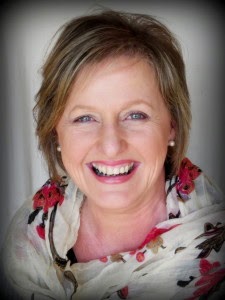
Today we welcome another South African author, Inge Saunders to our blog to answer some of the author questions. Inge's debut novel was released on 23 December 2014 and I trust there are many more being released soon.
What genre do you write in? Any specific reason why you chose this genre?
I love writing romance, specifically in the sub-categories contemporary and what some would call chicklit since some of my stories aren’t quite your straightforward Harlequin types. They are fresh, humorous, elements of ‘the real’ (my phrase for issues characters haveJ) but always has froth and a lightness to it that doesn`t make the story feel stifled. My first ‘grown up’ novel, Falling for Mr. Unexpected, has a nice blend of these elements and helped me to explore what I`d like to ‘see’ in my future contemporary romance novels.
I also write YA, stories that range from high fantasy to paranormal/supernatural romances and even science fiction. It`s funny how I always have this image in my head of being a movie director, having to understand the motivation and challenges for every character, even the minor ones.
The earliest advice I was given (at age fourteen) when I started writing, was to write stories I`d be interested in. And that`s the reason I write in these genres.
Where do you get the ideas for your books? How do you get from idea to outline?
Like I mentioned above, I write what interests me. I think the moment you start to try to emulate what`s out there and what people say sells, than it`s going to be hard to stay true to your voice. Of course it does help when current fads in books inspires you, but I`d say first write what interests you. They`re unique to you, which already will make your story stand out from the rest.
I get my ideas from books, TV, life, people, art, and music…basically everything. Falling for Mr. Unexpected was largely influenced by Pop Culture and Celebrity Culture. I was watching ENews (yeah I know *laughs*) and another sex scandal was being reported on. The ‘news’ report became one of the external conflicts in the book.
My process for outlining ideas vary, when I entered sytycw2012 it wasn`t preplanned, in fact it was the first time I`d heard of the competition. So I was basically writing by the seat of my pants *lol* However in 2011, I had started writing a YA series with very detailed mind-maps. I used them as a means to keep track of characters and sub-plots since I was writing across categories: supernatural and science fiction.
I`m more prone to ‘pen’ down an outline/brief synopsis of where I want to go. I would go so far as to note down little writing cues or quirks the character would have. Some might not make it into the story, but it makes my characters more three dimensional. I`m not big on outlining the story from start to finish, the mystery would be lost for me. I`d become bored. So you wouldn`t find me with a storyboard outlining each tiny aspect but more broad concepts especially focused on character development/conflict/the stakes. Usually when a story get`s to this stage it also means I`ve written 1-3 chapters on it, which is another crazy thing I do.
I love to jot down ideas then scenes to see how much I like the story or characters. I would usually move on from there. A recent YA story idea I got from a quote I saw on Twitter. I typed out the quote and left it to spook me for more than a week, then I sat down and wrote 2 Chapters. I have a big picture of where I want to go but will only outline it when the idea has marinated some more.
A current contemporary romance I`m working on however didn`t get the same treatment, I`ve written a brief synopsis, and pondered some questions in regards to the characters: what`s their overall story goal besides romance? What must they learn about love? What are the stakes besides heart break? How to make their major conflict internal? And then one of my favorite things to do, write down ‘20 things your reader will never know about your character’. The last tip has a way of seeping into your story without you even realizing, which makes it much richer.
If you have to choose only one element (setting/character development/ structure/ conflict/ etc.) that is absolutely essential to every novel you've written, what would it be? Why?
Conflict. Without this element I have no interest in writing a story. I wrote my fist story at age fourteen, and proceeded to, on and off, write stories through high school. Then for a couple of years at varsity I was more focused on academia and hanging out with friends, that writing consisted mostly of poetry. At age twenty-two I started writing again, both times when the novel writing bug bit it wasn`t only about the love interest of the characters (interesting as that were) but the personal obstacles they had to overcome that kept me going. Every story I`ve abandoned since can be attributed to conflict. There either weren’t enough or the right kind. So at this point in my writing journey, I focus a lot of conflict, I`ve even gone back to ‘study’ the classics like Jane Eyre just to get a feel for it.
How much time do you spend on getting to know your characters before you start the first draft? Why?
This wasn`t something I did when I first started out. I would just delve head first into a story and drown myself in it, discover my characters as they discovered themselves *laughs* What this translated into afterward was a lot of editing and polishing and asking ‘what the hell?’
I now slow cook characters in my head and on paper. I even employ Pinterest and think of celebrity lookalikes for them. I ponder their role in the family structure, e.g. what kind of child were they like? Especially if it`s important for my story. What are their insecurities? Pet Peeves? Favorite ice-cream? It sounds like work, but then again we all know writing isn`t as easy as people think *wink*
And yes, I am that weird author who has conversations with my characters in my head; it makes them human to me. They become people and sometimes take over the story without my knowledge as I type late into the night J I do all of this because I know I`ll end up with well developed characters as opposed to one dimensional ones. Even villains and bad boys have layers. Explore that thoroughly before committing them to paper, all of it might not end up in the story, but it does add something to your writing.
What is your writing process like? Do you finish the first draft and then start editing or do you edit while you write? Is there any specific reason why you do it like that?
Since I`ve worked with a professional editor, I`m not as ‘free’ to just sit down and write and overused-words-be-damned- I`m going to let my muse run wild. Nope. But I`m also not religious about editing a first draft.
I think there`s a fine line. There`s a point you have to shut out your inner critic and just write the story. It`s called a first draft for a reason. And I also have to add, something wonderful happens when you shut out all the voices, close the mental door to rigid lines and just go for it. A diamond in the rough is still a diamond, so don`t sweat the rough so much.
So I`m more conscious of how I write but not to the extent where it cripples creativity, I believe you should write first, edit second. Because either way, you`re still going to have to edit that first draft.
If you have to give one sentence advice to a novice writer, what would it be?
Develop thick skin early on and be teachable *laughs*
Could you please give us a list of your published books and a short blurb about each one? Please state the publisher and year published as well.
Falling for Mr. Unexpected

Can Emma fall for Mr. Unexpected when she doesn’t believe in Mr. Right or even Mr. Right Now…?
Primary school teacher Emma Cupido compares the notion of “The One,” with believing in the Tooth Fairy. When the school holidays starts, she heads for her brother-in-law`s beach house in Strand, South Africa and stumbles on more than she bargained for.
Hollywood heartthrob, Damian Davidson flees LA thinking his beach house in SA would be a safe hideout from his sex scandal. He’s had his fill of manipulative women and when he mistakes Emma for a crazy fan, all hell breaks loose.
Emma and Damian get off to a rocky start but first impressions can be deceiving. Is there more to Damian than the superficial taint of Hollywood? And what happens when she agrees to a trip to LA? Will Emma become a believer in “The One” or just another Hollywood scandal?
Excerpt:
She didn’t put her clothes back on, only lumped them together, shoes and all, and hurried back into the house via the still-open patio. Emma released a loud, earsplitting scream.
Before her stood a half-naked man, dressed only in a white towel.
As this knowledge registered, so did the fact she wore little else but her underwear. Her eyes nearly popped out of their sockets, and she still hadn’t stopped screaming.
“Would you stop that!” the half-naked stranger yelled in a deep baritone, causing her to clip her mouth shut.
“Who are you? What are you doing here? I’m calling the police!”
He didn’t flinch; instead, he turned his back on her and walked to the small side table next to a big white-and-blue sofa.
Before his huge frame obscured her vision, she made out a black cordless phone. Her chest heaved while she mutely watched him pick up the phone.
This must be an aberration brought on by the effects of frolicking in the ocean; there was no way she was having a confrontation with a half-naked man, in her sister’s house, on the first day of her stress-free beach holiday.
Her brain hiccupped at her illogical conclusion. Nope, what’s happening is, in fact, real.
“I’m sick and tired of this,” he said into the phone and gave her a glare over his shoulder. “If it’s not underwear in the mail, naked photos on my windshield, it’s an intruder running around naked in my home.” His fiery eyes burned holes into her.
“What?” she blurted. She clutched her dry clothes in front of herself. “Who are you? What are you doing here?”
*Falling for Mr. Unexpected published in 23 December 2014 and now available directly from
iTunes:
Where can we find you on social media?
You can connect with me on my blog: Inge Saunders - Inside These Lines
On Facebook: http://ingesaunders.facebook.com
Pinterest: http://ingesauders.pinterest.com
Goodreads: http://ingesaunders.goodreads.com
About Inge Saunders
Inge Saunders form part of ROSA (Romance writers` Organization of South Africa), where she`s learned a lot from all the veterans there. She was ballsy enough to enter sytycw2012, write a 60k romance novel “Falling for Mr. Unexpected” in three weeks, that`s coming out with Decadent Publishing in 2014.
She writes romance/chick-lit for a mature audience, but has a passion for YA and the supernatural since Buffy the Vampire Slayer and Interview with a Vampire (books and movies). You can find her first YA series here: http://w.tt/1mJRb6X