Tuesday, September 9, 2014

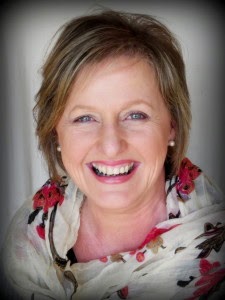
Author Interview: Gina Rossi

Today I am honored to welcome multi-published Gina Rossi to our blog. Gina has graciously agreed to share some valuable novel writing tips with us today.

Are you a plotter or a pantster?
I’d long to say plotter − and I start every book intending to be a well-organized plotter − but I’m a panster through and through, and that’s how I always end up writing. Before I start a book, I define my characters as well as I possibly can, work out a rough beginning (say, the first three chapters), plus the last chapter, then I go for it. I’m always surprised by the twists and turns that happen on the way. It sounds a muddle, doesn’t it? However, I reckon if you’re a pantster by nature you shouldn’t fight it, because you’ll likely find a clear stream of creative thought without the formality of a plot plan – I would go as far as to say especially without a plot plan, As a newbie writer, don’t put off writing because you haven’t got a whole story plotted out. Start today, now, and see where that loose bundle of ideas takes you…

If you have to choose only one element that is absolutely essential to every novel you’ve written, what would it be?
Conflict in every scene is essential, even on every page if possible. By this, I don’t mean a bomb has to go off on page one, a plane crash on page two, and a cruise liner sink on page three, all hands lost to saltwater crocodiles. There are many forms and levels of conflict (think of it also as tension, pressure, anxiety, niggles, all that kind of stuff) even in regular, daily life. If your hero (or heroine) encounters a range of such conflicts – big, medium and small − as he moves through the story, the reader will a) relate to the hero and his human problems, and b) most important, keep turning the pages to see how he overcomes these obstacles.
Regarding conflict, I find it really helps me if I can answer these four questions across about ninety percent of my scenes, as I write my way through the story.
1.     What is the main character trying to do?
2.     What goes wrong?
3.     What does he/she do to fix it?
4.     Why does it matter?

How much time do you spend on getting to know your characters before you start the first draft? Why?
A lot. I use a detailed character questionnaire – which I’m very happy to share if anyone wants to try it out. When I know a character intimately, I know exactly how he/she will behave in reaction to just about any situation the story throws at me. I study faces, too (yes, I get heaps of funny looks), trying to work out how looks, mannerisms, voices, body language, and even clothing, influence or affect character. You can tell a book from its cover, I’m convinced. Of course the most tedious part of all this research is searching ‘hunk’ and ‘hottie’ on Pinterest. Good luck with that!

Do you submit to multiple publishers at the same time or stick to one?
I submit to multiple publishers, why not? Some publishers request – instruct − you not to, but never give a reason why, so I ignore. I imagine it’s to make life simpler for them. Submit as many different works as you possibly can, often, widely, and simultaneously. Don’t submit one thing to one publisher and sit back and wait on them. And, while that’s all going on (and you’re keeping a detailed spreadsheet of what’s what and where) get on with your writing.

My advice to the novice writer in one sentence:
Even (especially) if you are unpublished, go around telling people you are a writer, and put ‘writer’ next to ‘occupation’ when filling in forms – that way you have to write, and publish, one way or another, or people will think you’re an idiot. 

Could you please give us a list of your published books and a short blurb about each one? Please state the publisher and year published as well.

THE WILD HEART 

(first published by The Wild Rose Press in 2012, self-published in 2014)

A romantic adventure set in the majestic landscapes of Southern Africa

Georgina Blake flees a refined life in eighteenth century England to hide a scandal. Determined to start a new life, she voyages to the wild and beautiful Cape of Good Hope, unprepared for the adventure, danger and heartbreak that await her. On a remote farm, hidden in a magnificent mountain valley in the Cape hinterland, she meets intriguing stranger, Anton Villion, who threatens her precarious new-found security, yet steals her heart. Anton, privy to a painful secret, is drawn to Georgina, but wily Louisa Summerton is hell bent on a swift union with him, leaving Georgina adrift in a savage landscape. Will Georgina and Anton’s love lie buried forever, along with the truth? Made for one another, yet driven apart by fate, will they ever meet again? Will they be able to salvage sufficient strength and courage to embark on a journey to redemption and everlasting love? 

Available from all Amazon  sites.

LIFE AFTER 6 TEQUILAS 
(published by Thornberry Publishing UK in 2013) 

A contemporary, chick lit romance featuring a London career girl whose life changes when the childcare agency throws her a curved ball.

Beth Johnson, an upbeat, hardworking, single mum living in London takes the humorous challenges of life in her stride. Her career is fast-tracking but that’s secondary to baby Jacob – his care and development is paramount. When her impeccably-organized childcare routine implodes at the worst possible moment, she has no choice but to leave Jacob with unlikely ‘nanny’, Davit Kacharava, a Georgian migrant. Is she making an enormous mistake, letting this stranger into her comfortable world, even if he is gorgeous? She’s drawn to Davit but he resists, so why does she reveal to him the shocking secret that overshadows her life? And can she face the truth – do what’s right for herself, Jacob and Davit – before it’s too late?

Available from all Amazon sites. 


TO HEAR YOU SMILE 
(self-published in 2012)

A contemporary romance novella set in the glorious Cotswolds, paying tribute to the Paralympians of London 2012

Disillusioned and dumped, London girl, Olivia Sinclair, hides out in the English countryside, unaware that handsome local stranger, Zachary Jordan, is a world class athlete. Deeply attracted to his intuitiveness and apparent sixth sense, Olivia nevertheless shuns him when he scares her badly on a date and, worse, when she finds out he has stolen something precious from her. Then she discovers the devastating truth about Zac. He's blind, and somehow, in their brief encounters, she hasn't noticed. She's determined to make amends, but Zac, crushed by her carelessness, doesn't want to know, and Olivia faces a gruelling, uphill battle to win his respect and love


Available from all Amazon sites.

Where can we find you on social media?

Twitter: @Ginagina7


A Word (or Two) from Gina Rossi

All my wonderful family and friends aside, writing is the most enjoyable element of my life. I write historical and contemporary romance - being an ardent fan of the happy ever after - and am both traditionally- and self-published. Apart from developing full-blooded characters, I enjoy creating a specific setting for each book I write, mainly because I love to read books that are firmly grounded in their own landscapes. I've been lucky enough to live in the most beautiful parts of the world, from stunning Cape Town to the green depths of the English countryside, and the sunny French Riviera.
I try to never let my memories be greater than my dreams!
If you read my books, I hope they bring you much enjoyment, just a step away from the real world.

About Gina Rossi

Gina Rossi was born in South Africa. She grew up in Johannesburg and lived in Cape Town before moving to England to live near Oxford,in the Cotswolds. Now settled in the sunny south of France, Gina is able to write full time. Her debut historical romance 'The Wild Heart' was listed for the 2012 Joan Hessayon award. She is a member of the Romantic Novelists' Association (RNA) in the UK, and the Romance Writers Organization of South Africa (ROSA)

Thank you Gina for visiting us today and providing our readers with some excellent novel writing tips. It is always a pleasure to find established authors willing to share their knowledge with aspiring authors. 

Wednesday, September 3, 2014

Author Interview: Louise Rose-Innes

Today it is my great pleasure and honor to welcome the talented Louise Rose-Innes to our blog to give us some novel writing tips. Definitely not a novice in the writing world, Louise can offer great insights into the writing process that works for her.

What genre do you write in? Any specific reason why you chose the genre?

I write contemporary romance, and more recently romantic suspense. It’s important from a novelist’s point of view to define which genre you write in for a number of reasons. Firstly, it helps your readers define you. If they like suspense, and you write suspense, it’s a good match. If you write something in between, they may not think of you as a suspense author, and you’ll miss out on those sales. Also, it helps with search terms. With a definite genre you’re more easily found if a reader searches for suspense, or contemporary romance. In between genres are not easy to search for or find, and are searched for less frequently. To make your books available online, it’s better to be linked in a definite genre.

Are you a plotter or a pantser? Why?

Most definitely a plotter. I can’t figure out how authors write a story without knowing how it’s going to turn out. For me, that would be impossible. As I like to include elements of adventure and suspense in my books, I have to know the plot before I start writing. For me, its essential. 

If you are a plotter, how thoroughly do you outline the plot?

Pretty thoroughly. I know all the major turning points of the story. I know the characters and how they react to all the plot elements. I even have a rough chapter breakdown. It makes writing the first draft so much easier, and quicker. 

What is your writing process like? Do you finish the first draft and then start editing or do you edit while you write? Is there any specific reason why you do it like that?

I plan my story from start to finish. I know the plot points, the characters, the conflicts and what happens in each chapter before I start writing. Then I sit down and writing the first draft. This usually takes about a month, maybe two, depending on the length of the novel. I write and try not to edit too much. It stops my momentum and if that happens, it takes a while to get back into the right train of thought again. Then I spend another month or two re-writing, ironing out any issues, spicing up the love scenes and adding in elements here and there, but mostly I just focus on improving the writing. 

Do you only self-edit or hire a professional editor? Why? 

If I’m self-publishing I hire a professional editor. You cannot underestimate the importance of a polished manuscript. Readers are brutally honest in their reviews, and any mistakes will be highlighted. If it’s with a publisher, then that’s all taken care of. 

If you have to give one sentence advice to a novice writer, what would it be?

Keep writing. It’s only after about the third book that you come into your own style and find your rhythm. I’ve written five books now and I finally feel like I’ve got my own definitive “voice” and my writing feels like it flows better than it ever did. With every book your writing will improve, as will your process and your technique. 

Could you please give us a list of your published books and a short blurb about each one? Please state the publisher and year published as well.

a. Personal AssistanceA woman with a deadly secret is trapped in a country in the midst of a revolution. (Entangled Ignite – 2014)


Available from online retailers like Amazon.com http://www.amazon.com/Personal-Assistance-Entangled-Ignite-Rose-Innes-ebook/dp/B00M65OFKS

b. The New Year ResolutionA single mother struggles to find love, and then bites off more than she can chew. (Self-published - 2013)


Available from Amazon.com http://www.amazon.com/dp/B00D7HXMDU/ 

c. The Italian InheritanceA young woman travels to Italy in search of a father she never knew. (Self-published - 2012)


Available from Amazon.com http://www.amazon.com/dp/B009VJ1M44


d. Antarctic AffairA journalist interviews an intrepid photographer on board a vessel bound for the Antarctic. (Self-published - 2010)


 Available from various online retailers :Amazon.com

Where can we find you on social media?

a. Twitter: @LouiseRoseInnes
b. Facebook: www.facebook.com/louiseroseinnes/
c. Pinterest: http://www.pinterest.com/louisenovelist/

d. Goodreadshttps://www.goodreads.com/author/show/4720289.Louise_Rose_Innes

About Louise Rose-Innes


Louise Rose-Innes writes contemporary romance and romantic suspense. Born in sunny South Africa, Louise is a lover of sunshine and the sea, and this is often reflected in her novels. After completing a post graduate in Marketing Management, Louise headed off to the United Kingdom to gain work experience and travel. She now lives in leafy Surry with her family, and when she's not writing, is traipsing through the beautiful countryside, or kayaking on the river Thames.

Visit Louise at www.louiseroseinnes.com.


Thank you for sharing your processes on the blog today. Seems like most of the authors do some form of plotting. So, are you a plotter or a pantser—or maybe a little bit of both?

Monday, September 1, 2014

Novel Writing—Character Creation for Beginners

A couple of years ago I posted about getting to know you characters by using the free YWriter5 software. The problem is, you still have to really get inside the character’s head to stay true with writing the character’s reactions, thoughts and decisions. Please bear in mind that I’m no expert and can only share what appears to work for me.

There is loads of information available on the internet and in “How-to” books, but not everything will work for you—and that’s all right. Every writer is different just like every character is different. 

Some characters you create will be like a succulent flower ...

Some characters are like succulent flowers while others will resemble a prickly cactus. Over the years I’ve gathered character sheets from many different people and took what worked for me from each one. Some character sheets were just too detailed for my liking while others had very few points that I thought was pertinent to the character I wanted to create.

Depending on how I came up with the idea for a character, I’ll either work backwards to his or her history or forwards from the history to get to the character I wanted. Let me explain.

Let us start with a character named Brenda. The first question I ask is: What must Brenda learn through this story? In other words, what is the theme of the story? In this story, Brenda must learn that she deserves to be happy. Now we know a couple of things straight away—she is unhappy at the start of the story and that she thinks she doesn’t deserve to be happy. This leads to why she is unhappy now and why does she think she doesn’t deserve to be happy. In other words, something in her past had such an impact on her, that she still bears the guilt thereof.

Now we get to flesh out the character’s history. Brenda grew up in a middle class family with slightly over-protective parents. Before going off to college, she wanted to take a year off to ‘find’ herself. Her parents had saved for most of her childhood to be able to offer her a good education and an argument erupted while Brenda was driving the family to a restaurant. She lost concentration on the road and caused an accident that led to the death of her parents. She only learned afterwards that her parents had mortgaged the house and sold some of their property to raise enough funds to meet ends meet and send her to college as well. According to Brenda’s thinking, her parents had sacrificed their own happiness to allow Brenda to be happy and Brenda thanked them by killing them. And just because she was selfish. So, to her own mind, Brenda didn’t deserve to be happy—ever. This is a melodramatic example, but it illustrates that by asking why, you get to the history of the character without a lot of questions.

What did she do after the accident? Where did she go? Why? How did this influence her choices leading up to the start of the story? Where does she work when you start the narrative? What caused her to choose this particular employment? Is she happy in her job? Is she good in her job?
The job a person has, often explains their way of dress. If Brenda is an accountant, she is going to dress differently than someone selling beauty products, a cash clerk or a mechanic. Her choice of employment often influences how she speaks and thinks. Does she choose her words carefully, weighing the consequences like a good accountant or is she a blabbermouth? Does she socialize with her co-workers or mostly keep business and pleasure separate?

At the start of the story, you need to know what your character’s greatest wish and greatest fear is because you will use this knowledge to put your character to the test. Every test must be in essense a failure until the last one where the character triumphs to come to the realization that she deserves to be happy. Notice I it has to be a failure in essence—not a complete failure. The character must learn something about herself with each test so although she sees it as a monumental failure, it actually takes her closer to reaching the end goal.

Now that you know what type of person your protagonist is, you can decide on physical appearance.  You have to decide if the way that your character looks is going to play a major or minor part in the development of the character. Brenda might be beautiful with a face unmarred by the accident and that could increase her feelings of guilt. Or she could bear a scar from the accident that serves as a permanent reminder of the horrible thing she had done.

This is usually enough background on a character for me, but the final step is to ask my character a direct question and let him/her answer in their own voice. This sounds stupid, but it helps to establish the character and his/her speech patterns firmly in my mind.

As the story progresses numerous other things usually come to mind that adds depth to the character, but at least I know that at the start of the story, I had the basic facts sorted.


This method works for me, but like I said at the start of this post, it might not work for you. Maybe other writers will share their methods of creating real characters with us as well.

Wednesday, August 27, 2014

Author Interview: Elsa Winckler

Today I'm pleased to welcome our first author, Elsa Winckler to the interview room. Elsa is a well-known author in South Africa and has several Afrikaans novels published as well two novels with Escape Publishing, the Australian division of Harlequin.

What genre do you write in? Any specific reason why you chose the genre?

I write contemporary romances. I do like the odd shape shifter story and maybe I’ll write one of those some day. But I prefer to write about the present and colour reality with a little bit of fairy dust.

Where do you get the ideas for your books? How do you go from idea to outline?

It varies. I’ll hear or see something that triggers the famous ‘what if’ question. For instance, I read an article about a horse whisperer a while ago. The idea fascinated me so I spent hours on the internet, found someone weird and wonderful to talk to and the story was born. I then decide on characters (or they decide to be in the story) and I start writing.

Are you a plotter or a pantser? Why?

Probably more of a pantser, I’d say. I mainly start with an idea, then decide on the characters and maybe write down one or two things. But I mostly make up the story as I go along. And it mostly tells me how it should be written.

What is your writing process like? Do you finish the first draft and then start editing or do you edit while you write? Is there any specific reason why you do it like that?

I edit as I write. And when I’m finished with the first draft, I edit the whole thing again. Normally I’d start each day reading what I’ve written the day before and edit it as I go along. This helps me to remember what I’ve written and also gives me a chance to do the first round of editing.

If you have to choose only one element (setting/ character development/ structure/ conflict/ etc.) that is absolutely essential to every novel you’ve written, what would it be? Why?

I’d say character. Characters take the reader on the journey, so you should make sure the readers care about them. 

If you have to give one sentence advice to a novice writer, what would it be?

If you’re a writer, write.

Could you please give us a list of your published books and a short blurb about each one? Please state the publisher and year published as well.


Love, in writing (Escape Publishing) 2013


A hardcore Science Fiction writer and a soft-hearted romance novelist clash on the sunny South African coast...
Margaret Parker is a hopeless romantic whose fantasies fuel her writing. For Graham Connelly, science fiction is the perfect genre to express his cynical world view. A chance meeting in a lift leaves them both interested and aroused — with no clue as to the other's identity.
Margaret has been looking for a face to match her new fictional hero — and Graham's is it. Graham has been looking for proof that innocence and optimism still exist — and he's found it in Margaret. But fantasy isn't reality, and both Margaret and Graham are used to controlling their fictional worlds. Can they step off the pages long enough to find their own happy-ever-after?


Touched to the heart (Escape Publishing) July 2014


Discover beautiful South Africa in this sweet, heart-warming Cinderella story about a blogger, a billionaire, and one chance meeting. When it comes to men, if physiotherapist Caitlin Sutherland didn't have bad luck, she would have no luck at all. To help cope, Caitlin starts blogging in her spare time, about the types of men she meets and the bad dates she goes on. While on duty during the annual Wines to Whales bicycle race, a gorgeous, sweaty cyclist walks in and sets her hormones dancing. But he is Don Cavallo; one of the four Cavallo brothers — hotel tycoons, famous as much for their business skills as for the number of beauties regularly seen on their arms. Don Cavallo has his own issues with the other sex. He has yet to find one who is interested in him and not in his money or hotels. But when this sexy physio puts her hands on his back she not only touches his body, but also his heart. They've both been burned before, but neither of them can stop themselves from playing with fire.


 Where can we find you on social media?


Elsa has been reading love stories for as long as she can remember and when she ‘met’ the classic authors like Jane Austen, Elizabeth Gaskell, Henry James The Brontë sisters, etc. during my studies, she was hooked for life.

She married her college boyfriend and soul mate and after 38 years, 3 beautiful children and three grandchildren, he still makes her weak in the knees. They are fortunate to live in the picturesque little seaside village of Betty’s Bay, South Africa with the ocean a block away and a beautiful mountain right behind them. And although life so far has not always been an easy ride, it has always been an exciting and interesting one!

She likes the heroines in her stories to be beautiful, feisty, independent and headstrong.  And the heroes must be strong but possess a generous amount of sensitivity. They are of course, also gorgeous!  Her stories typically incorporate the family background of the characters to better understand where they come from and who they are when we meet them in the story.

She won an award for her first Afrikaans romance in 2010. 

Elsa, thank you very much for sharing your insights with us today. If you're a reader, you should get yourself one of Elsa's books for the pure enjoyment thereof and if you're a writer, read one of her books to see how she develops the characters. And above all, heed her advice: If you're a writer, write.

Wednesday, August 20, 2014

Learning From Published Authors

Isn't she just gorgeous?
I have sorely neglected this blog for quite some time. The excuse I could use is that I've been extremely busy, but that is flimsy as everyone leads a hectic lifestyle in modern times. We have to if we aim to survive, don't we? In my defense I must reveal that I had two erotic romances accepted for publication under a pseudonym in the year (yes, it has been a year) since I last posted here, self-published an Afrikaans novel and became a grandmother (I refuse to reveal my age) of a beautiful baby girl. 

However, I'm thrilled to announce that starting next week Wednesday, several published authors have agreed to give us some insight into the way they write. You can read ten self-help books on how to write and the rules that apply, but you still have to sort out how to do the practical stuff. Methods that work for some, others find completely impractical to use. So I decided to ask a few successful authors how they do it. 

If you've ever tried your hand at writing fiction, you would have heard the advise that you have to read what you like to write and try to discover what exactly about the book made you enjoy it so much. You have to pay attention to the way the novel was structured (took me a while to get the hang of this one, but luckily we seem to do most of it by instinct), the writing style and most of all, what about the writer's voice captured your attention. 

The authors who agreed to share their methods are all published authors, each with an unique voice and writing style. Different publishers contracted their books, so we'll get a general idea what works and what doesn't. 

I hope you will join me as we try to discover what made these talented writers so successful.